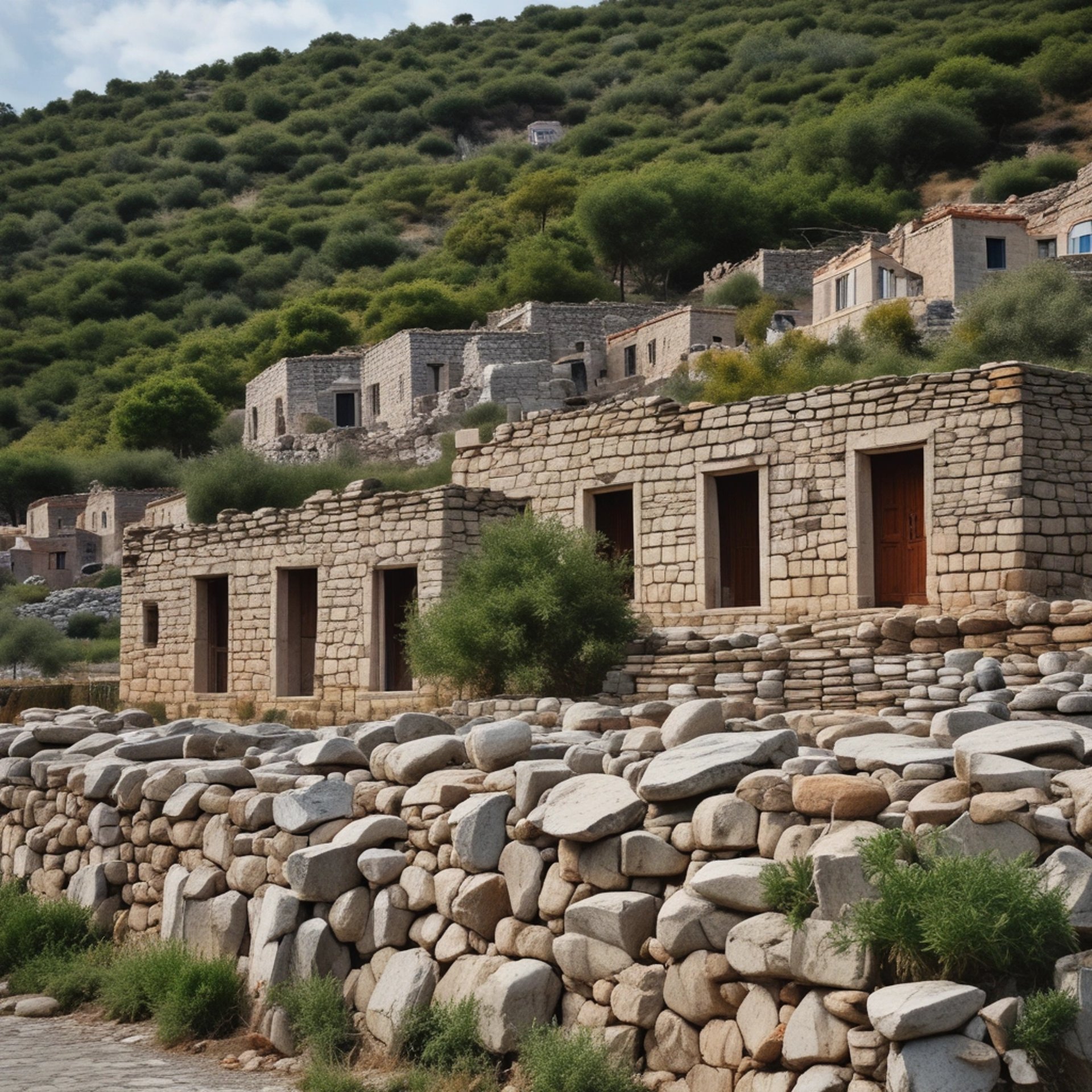
The Fairytale of Polichnitos
Once upon a whispering shore, on the southern edge of the Kalloni Gulf, there is a village that looks as if it were built from the warm, ochre heart of the island itself — Polichnitos. Perched on low hills and sheltered from the open sea, it grew where many little coastal hamlets once left their traces and found safety inland; its very name is said to come from those “many traces” — a memory of people seeking shelter from pirates and storms. Welcome To Lesvos+1
The houses of Polichnitos wear the island’s geology like a storyteller’s cloak. Local artisans carved the durable, red-brown volcanic stone — ignimbrite — into tall ground floors, wooden balconies and stately mansions; narrow alleys thread between them like secret passages in an old book. Because of this distinctive, well-preserved architecture, Polichnitos was declared a traditional settlement in modern times, a place where stone and craft keep the past alive. lesvosgeopark.gr
Long before we called it “modern,” Polichnitos and the whole isle of Lesvos passed through the pages of empires. The island’s story stretches back to ancient Greek times and through the Byzantine centuries; in the later Middle Ages Lesvos fell under the rule of Genoese lords such as the Gattilusi, and then — with the great sweep of history that reshaped the eastern Mediterranean — it came under Ottoman rule in the fifteenth century. Those long centuries left layers of culture and quiet monuments that the village still remembers. Welcome To Lesvos+2Βικιπαίδεια+2
But the village guards a secret that steams and sings: its thermal springs. For generations, warm mineral waters have risen here from the volcanic rocks — some of the hottest springs in Europe — and people have come to bathe and be healed in their steam. These springs were used through Ottoman times and have seen renewed life in recent years as wellness and spa projects opened new ways for visitors to find calm and renewal. elealesvos.com+2Welcome To Lesvos+2
Polichnitos has known hard seasons and sudden changes, too — cold winters that tested crops, earthquakes that reshaped lives, and waves of emigration and return that altered its population. Still, each time misfortune passed, the village gathered its pieces and wrote new chapters: publishing craftsmen’s names in stone, building bell towers for the churches, and filling the air with the scent of olive presses and kitchen fires. smitakislesvos.com+1
Today the village is a living storybook: a Folklore Museum preserves daily life and tools, the Church of Saint George keeps its ancient service and woodwork, and the remains of old fortifications remind us that this gentle place once needed to watch the horizon. Visitors walk the same alleys that fishermen’s children and olive-pressing families once knew, watch steam rise from the springs at dusk, and feel how the sea and hills have shaped a rhythm of life that is both placid and stubbornly alive. lesvostreasures.gr+2Travel Greece+2
So if you close your eyes while you stand in Polichnitos, you can hear the island speak — not in the language of empires, but in smaller, truer words: of stones quarried by patient hands, of springs that give back warmth, of balconies that hold evening stories, and of a village that remembers itself. It is a place where the past is not a museum but a neighbor; where every restored house is a fairy-tale rescued from forgetting
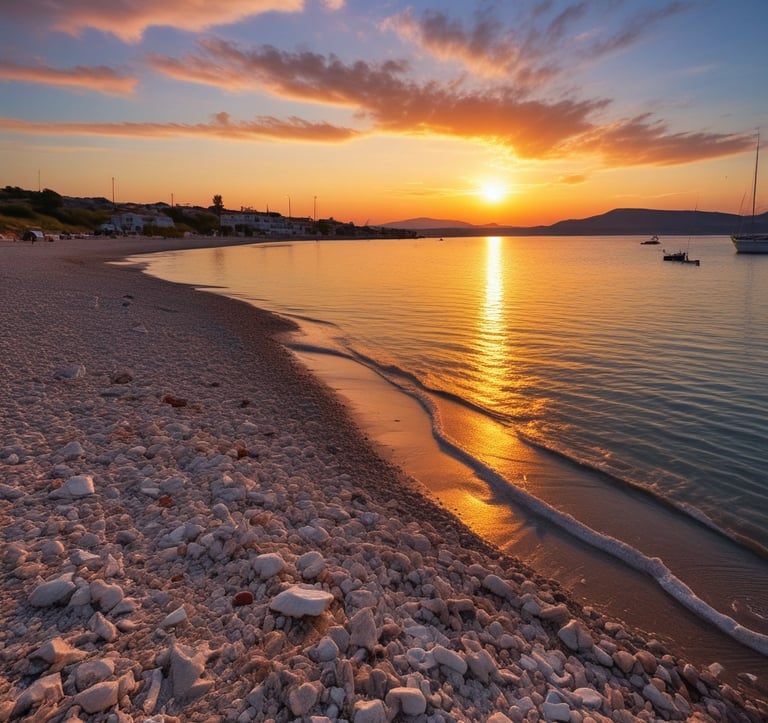

Between Sand and Steam: Vatera, the Springs, and Vrisa near Polichnitos
Just a few golden heartbeats from Polichnitos, the land changes: olive groves give way to soft sand, fresh sea breeze, steam rising beside rivers. Here’s what makes this area so enchanting.
Vatera Beach
Distance and Setting
Vatera Beach is about 8-10 km south of Polichnitos — roughly a 10-minute drive. Phileas Guides+2kalispera.se+2
It is Lesvos’s longest beach, stretching around 8 to 10 kilometers of sandy shoreline and backed by hills, vegetation, farms, and blue seas. visitlesvos.gr+2aegeanvacation.com+2Nature & Landscape
The beach has golden sand, often shallow shores for swimmers, tamarisk trees along parts of the coast, and areas with natural shade if you explore a bit off the more crowded stretches. visitlesvos.gr+1
At both ends of Vatera are rivers: Almyropotamos (which originates near the thermal springs) and Vourkos, flowing into the sea, creating wetlands, reeds and habitats for birds and other wildlife. kozanitis-vatera.gr+2visitlesvos.gr+2Facilities & Atmosphere
Vatera combines things: some parts are well organized (sunbeds, umbrellas, beach bars, tavernas), especially near accesses and hotels. Other parts are more untouched, more peaceful. visitlesvos.gr+3Phileas Guides+3hellenicseason.com+3
Traditional tavernas serve fresh seafood, local cuisine, simple dishes beneath pergolas or under trees, and there are places to stay ranging from family hotels to small apartments near or overlooking the beach. aphroditehotel.gr+2Phileas Guides+2Recognition & Special Qualities
Vatera holds the Blue Flag status multiple times for cleanliness and safety. Phileas Guides+1
It is also part of a broader ecological setting: the Vatera-Polichnitos Wetland, where more than 100 species of birds are recorded, and where flora like reeds, olive groves, kermes oaks, terebinths, and pines flourish. visitlesvos.gr
The Hot Springs of Polichnitos (Therma)
Location & Temperature
The thermal springs are very close to Polichnitos: about 1 to 1.5 km southeast of the village. visitlesvos.gr+2thermalsprings.gr+2
The water at the source can reach very high temperatures — up to 87-95°C in some points. visitlesvos.gr+2kalispera.se+2Geology & Water Composition
These springs emerge from among volcanic rocks and old lake sediments; deep faults let water fall down, heat up near volcanic activity underground, become enriched with minerals and gases, then bubble back up. Thermal Springs+2lesvosgeopark.gr+2
The water is chlorinated, with lower sodium chloride compared with seawater (about 3 times less), some sea water mixing (~30%), and has other minerals like lithium, iron oxides, etc. lesvosgeopark.gr+3visitlesvos.gr+3Thermal Springs+3Health & Relaxation
Because of the temperature and mineral composition, these springs are prized for a range of healing benefits: skin conditions; various rheumatic and arthritic pains; lower back, muscle aches; gynecological health; inflammatory issues; just general relaxation. visitlesvos.gr+2Thermal Springs+2Visitor Experience
The springs are set in scenic natural surroundings, beside the river (Almyropotamos), volcanic rocks dyed red and yellow from mineral precipitates, sometimes with algae and small streams, quiet pools (temperatures cooler in the bathing pools). There's a sense of being embraced by earth and water together. kalispera.se+2lesvosgeopark.gr+2
Vrisa Village
Location & Character
Vrisa is a small village in the southern part of Lesvos, about 50 km from Mytilene, and roughly between Polichnitos and Vatera. Βικιπαίδεια+2kalispera.se+2
It is part of the municipal unit of Polichnitos. Vrisa lies a few kilometers north of Vatera (about 5 km) and is close enough to enjoy both the beach and the springs. Βικιπαίδεια+1Features & History
Vrisa has narrow cobblestone streets, old traditional houses (some beautifully restored, some in need of time’s repair), a church, small tavernas, small shops, and a quiet pace that feels soft, slow, rooted. Angelfire+1
It also houses the Natural History Collection at Vrisa, located in the old girls’ school. The museum holds fossils of animals (elephants, camels, rhinoceroses, etc.) from around 2 million years ago, ancient flora and fauna, mineral and rock specimens, as well as zoological and botanical samples of great scientific interest. visitlesvos.gr+1Recent Challenges
In June 2017, Vrisa was severely damaged by an earthquake (magnitude around 6.3) centered near Plomari. Many buildings were affected and many villagers could not immediately return, leaving parts of Vrisa largely uninhabited or awaiting restoration. Βικιπαίδεια
How They All Connect (Polichnitos + Vatera + Springs + Vrisa)
Putting them together:
From your home base in Polichnitos, you are very close to all these wonders: the thermal springs are just a short walk or drive (1-1.5 km), and Vatera Beach is only about 8-10 km away, so you can easily enjoy beach days. Vrisa is tucked between these, offering a peaceful village atmosphere within reach of both sea and springs.
If you want to spend mornings at the springs, afternoons by the sea, and evenings wandering narrow village streets in Vrisa or Polichnitos with a taverna dinner — it’s absolutely doable. There are tavernas and simple restaurants in Vatera, in Polichnitos town and Skala Polichnitou (the port), and small shops scattered in Vrisa. Fresh seafood, farm-to-table ingredients, ouzo, local wine — the food culture is robust. Phileas Guides+3aphroditehotel.gr+3visitlesvos.gr+3
Nature is all around: wetlands, birdlife (especially in the Vatera-Polichnitos wetland), rivers, vegetation, olive groves. The change from sea to river, from warmth to shade, is gentle but remarkable. visitlesvos.gr+2visitlesvos.gr+2
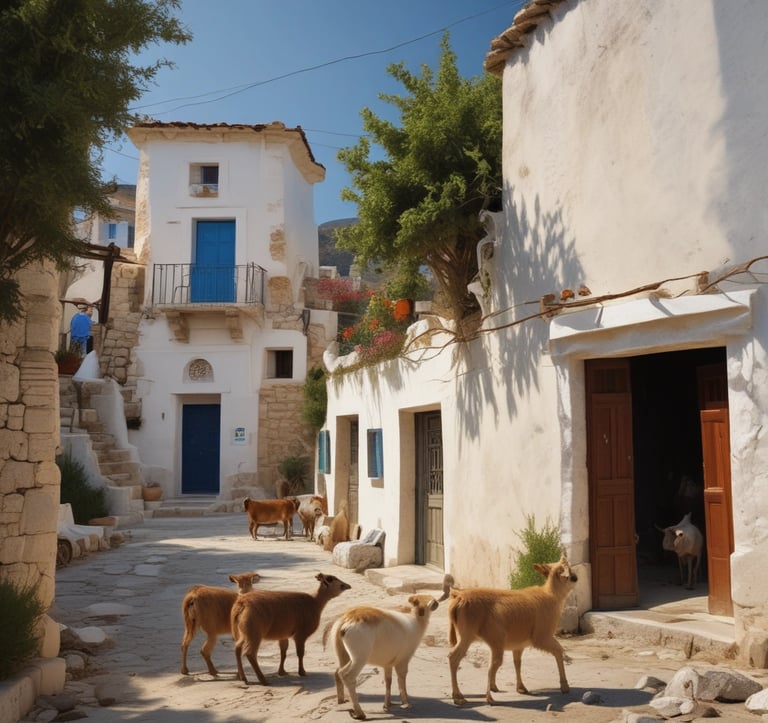
IMPRESSIVE NATURE
Animals & Wild Neighbours around Polichnitos
In the olive groves, the hillsides, the wetland shores, and under the moonlight around Polichnitos, many creatures make this land alive.
Wild Mammals & Forest Whisperers
The Foxes (Vulpes vulpes): Foxes roam these hills and wetlands. They are clever, often seen at dusk or dawn. Some farmers tell stories of foxes slipping through chicken coops, occasionally making off with a lamb, or disappearing into the shadows when startled. Even on quiet nights, you might hear their soft cries across the fields. visitlesvos.gr+2lesvosgeopark.gr+2
The Galia — Persian Squirrel (Sciurus anomalus): This beautiful squirrel is special. It’s one of the rare mammals on Lesvos, the only place in Europe where this species is found in its natural range. Agile and shy, it leaps through the trees and disappears before you can follow its tail. visitlesvos.gr+1
Other Forest Dwellers:
Along with foxes and squirrels, you’ll find stone martens (Martes foina), least weasels (Mustela nivalis), hares (Lepus capensis), European rabbits (Oryctolagus cuniculus), and hedgehogs (Erinaceus concolor). Each has its role: foraging, hiding, and helping the balance of insects and plants. visitlesvos.gr+1
Wetlands, Birds & Wings
Wetlands Around Polichnitos & Vatera: These are alive with water, reeds, and birds. Over 100 bird species are recorded in the Vatera-Polichnitos wetland — herons, glossy ibises, flamingos, white storks, avocets, black storks, and many migratory species. In spring and autumn, the skies fill with wings. visitlesvos.gr+2lesvosgeopark.gr+2
Polichnitos Salt Pans: Just north of Skala Polichnitos, salt pans plus ponds make a vast wetland of about 96 hectares. It’s nearly half the size of the famous Kalloni Pans. Birds gather here year-round: shorebirds, flamingos, shelducks, etc. There is a small track around the pans which gives beautiful close views of these birds. lesvosgeopark.gr+1
Reptiles, Amphibians & Little Crawling Lives
Reptiles & Turtles: Freshwater and marshy areas, as well as drier scrub, support many reptiles: tortoises, pond turtles (Balkan pond turtle Mauremys rivulata, European pond turtle Emys orbicularis), a variety of snakes (some harmless, one venomous species – the Ottoman viper Vipera xanthina) and many kinds of lizards and geckos. visitlesvos.gr+2naturagraeca.com+2
Amphibians: Frogs and toads abound near the rivers, ponds, and in the greener patches. Examples include the European green toad, common toad, and others. visitlesvos.gr+1
Other Creatures & Marine Neighbours
Bats & Night Flights: Several bat species fly under the cover of night. There is an endemic subspecies of the lesser mouse-eared bat on Lesvos. Bats wake after sunset to sweep through villages and groves for insects. visitlesvos.gr+1
Marine Life & Seals: In the sea nearby, there are dolphins (common bottlenose, striped, etc.) and on rare trails, the Mediterranean monk seal (Monachus monachus), one of Europe’s most endangered sea mammals, in coastal caves. If you watch quietly near sea-caves and cliffs, you may glimpse them. visitlesvos.gr+2lesvosgeopark.gr+2
Insects, Butterflies, Bees & Dragonflies: The island buzzes at midday and hums at dusk. There are over 80 butterfly species, hundreds of wild bee species, and dozens of dragonfly species flitting around rivers, marshes, and ponds. Their colour and movement add magic, especially near wetland edges. visitlesvos.gr+2Welcome To Lesvos+2
How All These Creatures Tie Into Life in Polichnitos
Imagine waking up in Polichnitos: olive trees catching light, the air warm with sea breeze, and quietly in the distance, the twitter of birds from the salt pans. By midday you might see a fox slipping by the edge of the village, or hear the scurry of squirrels among leaves. At dusk the bats begin; near water, frogs call; in spring, migratory birds pass overhead. The wetlands are both habitat and stage: reeds move in the wind, water mirrors the sky, and everything from insect to heron plays a part.